
A fish that dies in its first week usually didn’t die of anything you could see.
It ate at the store. It looked fine in the bag. Then it hung in a corner of the tank for two days and was gone on the third morning.
That pattern is common enough that many beginners assume they bought a sick fish. Sometimes they did.
More often, the damage was done on the way home and in the first hour after arrival.
It’s the most preventable loss in the hobby.
A fish bag is a tiny, sealed body of water that starts going wrong the moment it’s tied. The fix is slow, cheap, and takes about half an hour.
What’s happening inside the bag
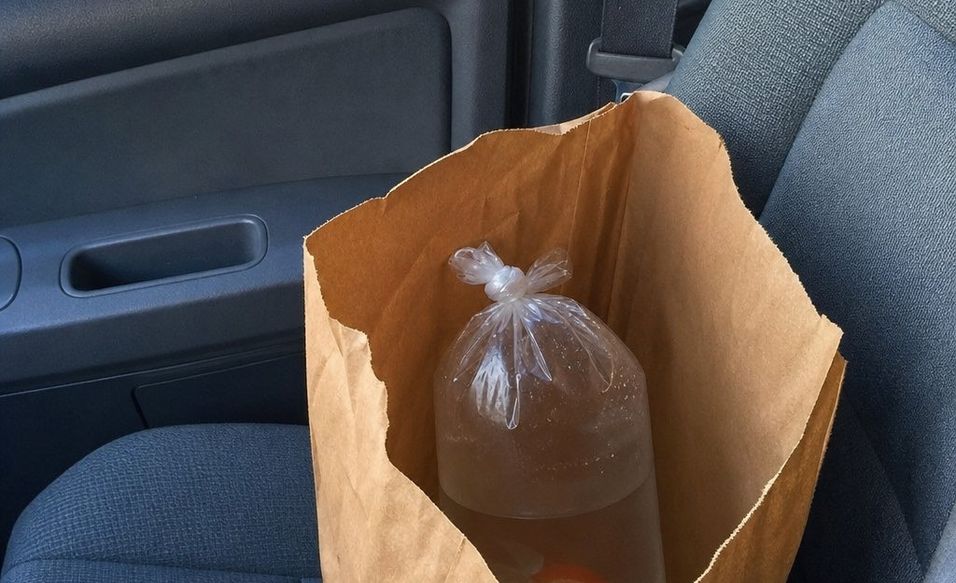
The bag looks like nothing more than water and a fish. Chemically, it’s a closed system: no filter, almost no surface exchange, and a live animal breathing in it.
Three things change during the ride home:
- Carbon dioxide builds up as the fish breathes. Dissolved carbon dioxide acts as a weak acid, so the pH in the bag drops.
- Ammonia builds up, because fish excrete it constantly across their gills and there’s nothing to remove it.
- Oxygen runs down and the temperature drifts toward whatever the car is.
Guidance from the Southern Regional Aquaculture Center, written for people who ship fish for a living, describes exactly this. By arrival, the pH in the bag is often much lower, ammonia may be elevated, and oxygen low.
Here’s the part that surprises people.
The low pH is protecting the fish. Ammonia in water exists in two forms, and which form dominates depends on pH. In acidic water, nearly all of it sits in the ionized form, which is relatively harmless.
So a fish can ride home in water carrying a fair amount of ammonia and be fine. The bag just has to stay sealed and acidic.
The moment the bag opens
Open the bag, and carbon dioxide starts escaping into the room. The pH climbs back up. As it climbs, the ammonia already in the bag shifts into its un-ionized form.
According to the University of Florida’s IFAS Extension, that un-ionized form is roughly 100 times more toxic to fish than the ionized form. Tissue damage can begin at concentrations as low as 0.05 mg/L.
Nothing was added and nothing was removed. The same ammonia that was harmless ten minutes ago is now burning the gills.
The same ammonia that was harmless ten minutes ago is now burning the gills.
The first hour after the bag opens is when most of the chemistry turns against the fish. That’s why the ride home rarely kills a fish outright.
The losses show up a few days later instead, once the gill damage catches up.
It also explains a piece of old advice that returning hobbyists often remember: never leave a bag open on the counter “to let it breathe.”
An open bag in room air combines the two problems. The pH rises with the store’s ammonia still in it.
A slow acclimation that actually does something
The shipping guidance from the Southern Regional Aquaculture Center puts the whole process at about 30 minutes, with tank water added to the bag gradually. That’s the aquaculture version of what hobbyists call floating and cupping.
The whole job is matching the bag to the tank a little at a time, then leaving the bag water behind. A home version looks like this:
- Dim the room lights before you start. The fish has been in a dark box or a paper bag, and bright light on top of everything else is one stress too many.
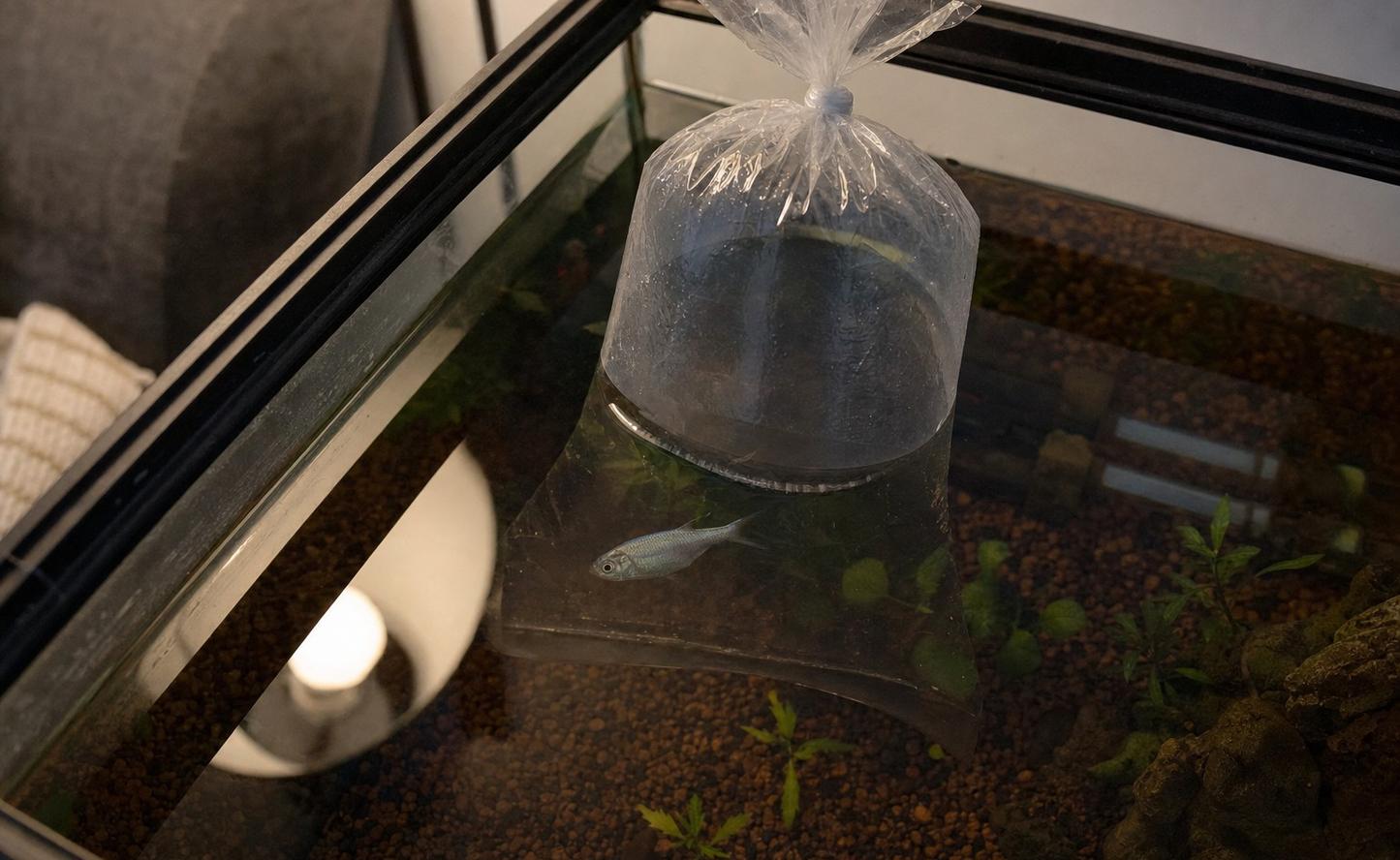
- Float the sealed bag in the tank for 10 to 15 minutes so the temperatures match. Don’t open it yet.
- Open the bag and add a small splash of tank water, about a quarter of what’s already in there. Wait five minutes. Repeat three or four times.
- Net the fish out into the tank. Don’t tip the bag in.
- Pour the bag water down the drain, not into the tank.
Discarding the bag water is standard hobby practice, and the chemistry above is the reason.
That water carries the store’s ammonia and whatever else came with it.
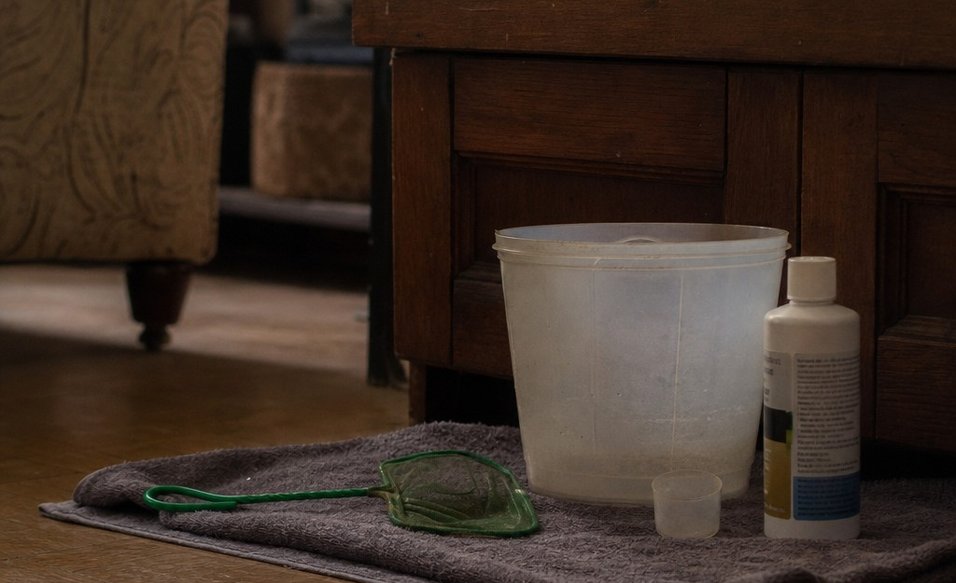
A water conditioner that binds ammonia helps during those 30 minutes. Most brands now sell one as an ordinary dechlorinator.
The shipping guidance itself suggests an ammonia-binding agent for exactly this step. You can compare aquarium water conditioners on Amazon and pick one that lists ammonia on the label.
If you buy through links on this page, Inside Aquatics may earn a small commission.
If the tank is brand new, none of this replaces cycling it first. A fishless cycle is what gives the tank somewhere for the new fish’s own ammonia to go.
The first 48 hours
A new fish that hides is behaving normally. So is one that won’t eat on the first day.
Handling does something to a fish that’s easy to forget. According to the University of Florida’s IFAS Extension, the physical act of netting and moving a fish strips mucus from its skin.
That mucus is the fish’s chemical barrier against infection, and it takes time to rebuild.
A freshly moved fish is temporarily less protected than the same fish will be a week later.
What it needs is quiet, stable water and no extra handling.
Three habits carry it through:
- Leave the lights off, or low, for the rest of the first day.
- Skip feeding until the next morning. Uneaten food in a tank that’s also processing a new fish’s waste is the wrong combination. When you do feed, feed lightly.
- Test the water on day two. Ammonia and nitrite should both read zero. If they don’t, a partial water change is the answer, not a medication.
Our guide on how often to feed aquarium fish explains why less is safer, for new fish and old.
Most fish problems are water problems. A fish that looks wrong on day two is far more likely to be reacting to ammonia than to have caught something overnight.
That day-two test is also where a liquid test kit proves its worth. A strip that reads “somewhere between 0 and 0.5” can’t tell you what a new fish is actually breathing.
The first month is the quarantine month
The same extension guidance that describes acclimation also recommends quarantining every animal and plant before it joins an established aquarium. That’s the standard the aquaculture and public-aquarium world runs on.
It exists for a simple reason.
A fish can carry a parasite for weeks without showing a single spot.
Transport stress is what tends to bring it out.
For a first tank with no fish in it yet, quarantine is built in: the tank itself is the quarantine tank. Add fish slowly, in small groups, and watch each group for a few weeks before adding the next.
Slow stocking is covered in choosing your first aquarium fish.
For a tank that already has fish, a plain 10-gallon tank with a sponge filter and a heater does the job. No gravel, one hiding place, a few weeks of observation.
If white spots show up, they show up there, and ich stays out of the main tank.
What a normal first week looks like
Hobbyists commonly report the same arc with new fish. Knowing it in advance saves a lot of second-guessing:
- Day one: hiding, no interest in food, colors washed out. Normal.
- Day two or three: exploring, first food taken, color coming back. Normal.
- End of the week: settled in, behaving like the rest of the tank.
Hiding and a missed meal on day one are normal; gasping and clamped fins are not. Neither is a fish that stays washed out past day three.
Those are water-quality signals first. The early warning signs of a sick fish start with the test kit, not the medicine cabinet.
A stable tank beats an impressive one. The same is true of a stable first hour: nothing dramatic, nothing rushed, and the new fish never finds out how close it came.